
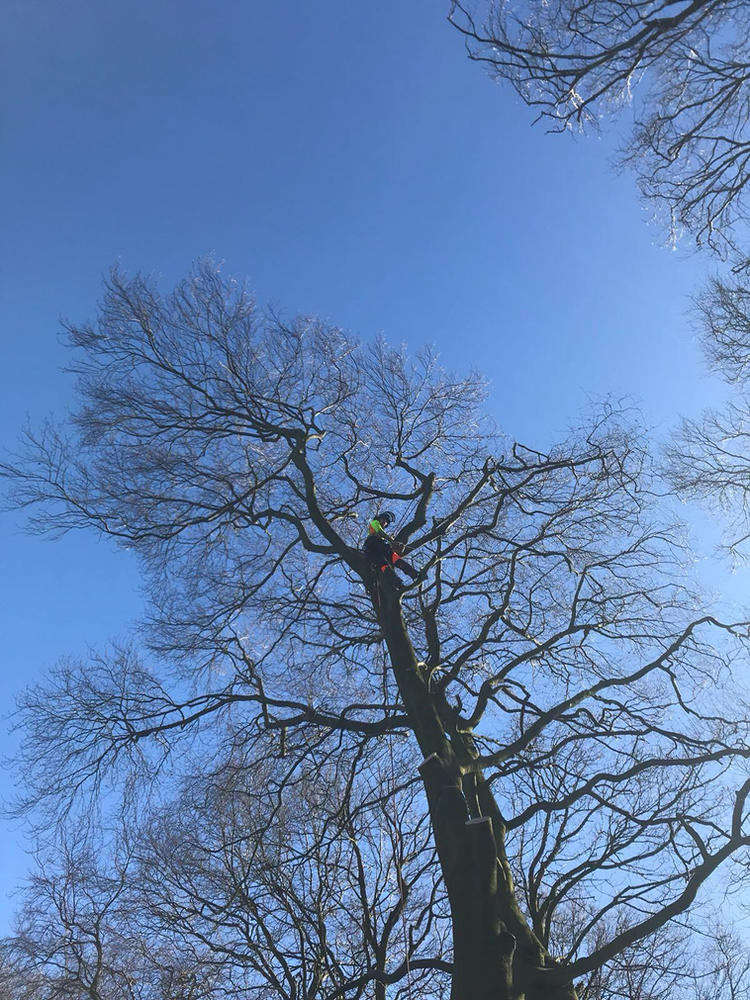
Tree surgery, hedge work and forestry.
Qualified arborists for homes, estates, councils and contractors across Hampshire, Surrey and Berkshire. All work to BS3998.
The full list, in plain English.
If it involves a tree, a hedge or a stump, it is on this page somewhere. If it is not, ring us anyway and we will point you at someone who does it.
Pruning and shaping
- Crown reduction
- Crown thinning
- Crown lifting
- Crown cleaning and deadwooding
- Pollarding and re-pollarding
- Formative pruning on young trees
Removal
- Straight felling where there is room
- Sectional dismantling and rigging
- Dangerous and storm-damaged trees
- Stump grinding
- Full stump excavation
- Wildlife monoliths left standing
Grounds and land
- Hedge cutting and reduction
- Overgrown site clearance
- Woodland thinning and forestry
- Utility and power line clearance
- Fence line and boundary work
- Woodchip and seasoned logs
Advice and paperwork
- Tree condition surveys
- TPO applications
- Conservation area notices
- Method statements for commercial sites
- Risk assessments
- Traffic management for roadside work
Tree felling and dismantling
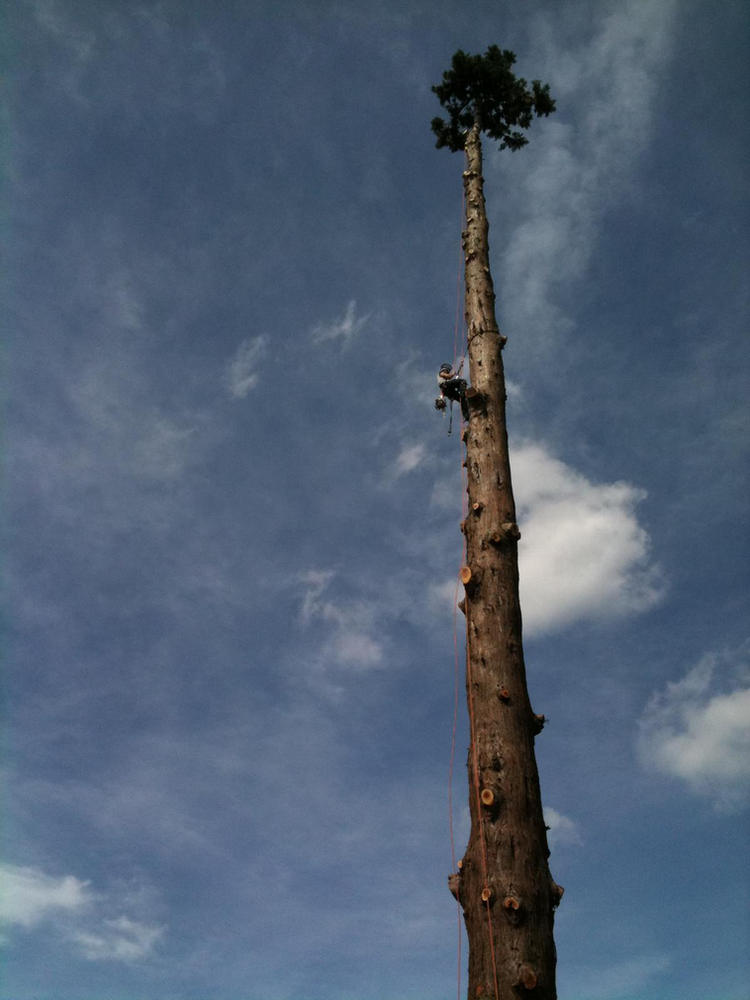
Very few gardens have room to simply drop a mature tree. Most of our removals are sectional: the climber works up, takes the limbs off in a planned order, and every piece is lowered on rigging rather than dropped.
It is slower and it costs more than felling, and it is the only sensible way to take a forty foot beech out of a garden that has a conservatory on one side and a neighbour's greenhouse on the other.
Where a tree is dead or hollow we will often recommend leaving a standing monolith instead. You keep the habitat, you lose the risk, and it is cheaper.
Crown reduction and pruning
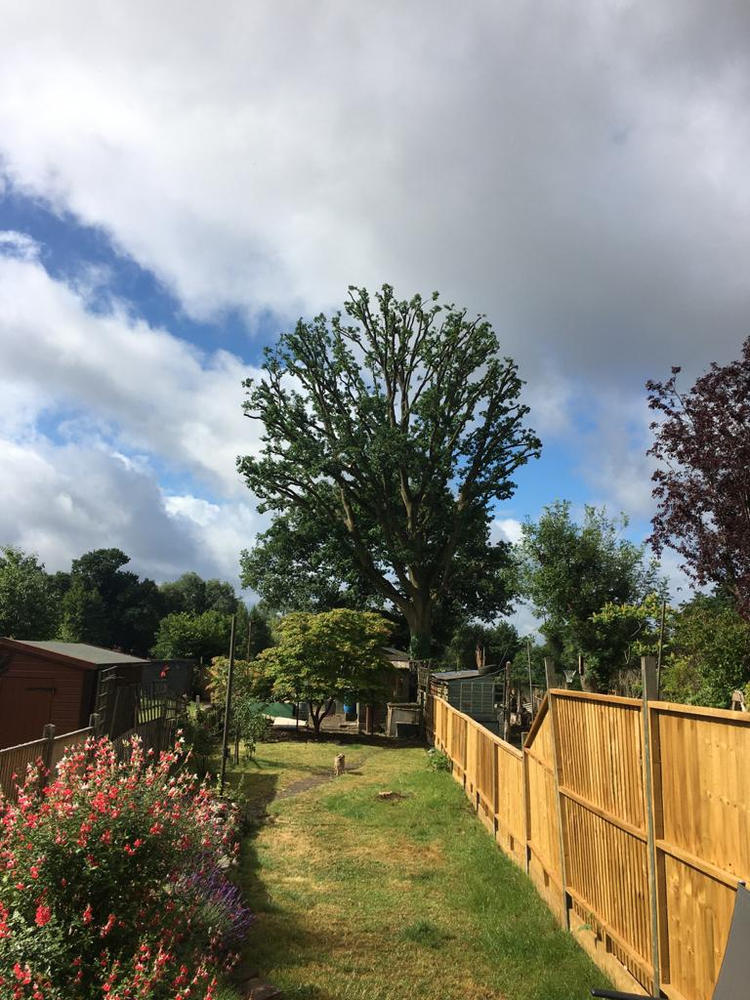
A good reduction should not look like a haircut. We cut back to suitable growth points so the tree keeps its outline, heals properly and does not throw out a mess of weak regrowth two summers later.
Crown lifting clears the ground under a tree for light, mowers and vehicles. Thinning lets wind and daylight through without changing the shape. Deadwooding takes out what is already dead before it falls on something.
All of it to BS3998, the British Standard for tree work, which matters if your tree is protected or your insurer ever asks.
And the rest of it.
Emergency and storm work
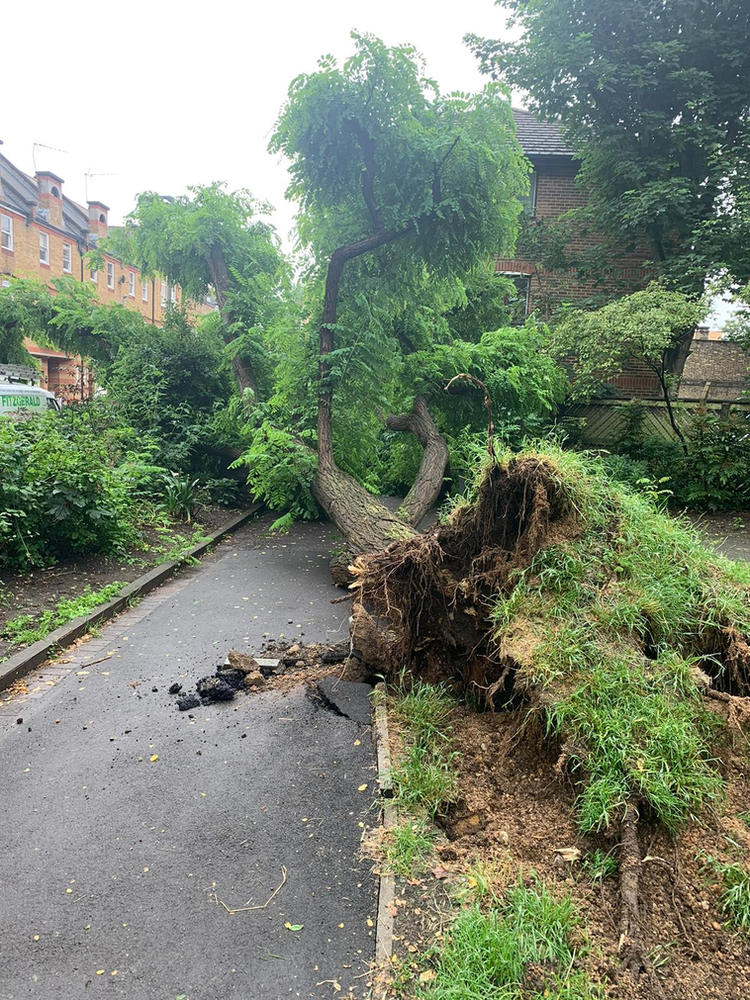
Trees on roads, roofs, cars and power lines. We carry lighting towers, chapter 8 traffic management and enough saw to make a road safe before daylight. Ring the mobile rather than emailing.
Emergency tree workHedge cutting
Annual maintenance cuts, hard reductions on hedges that have got away, and reshaping on conifer and laurel. Arisings chipped and removed.
Hedge cutting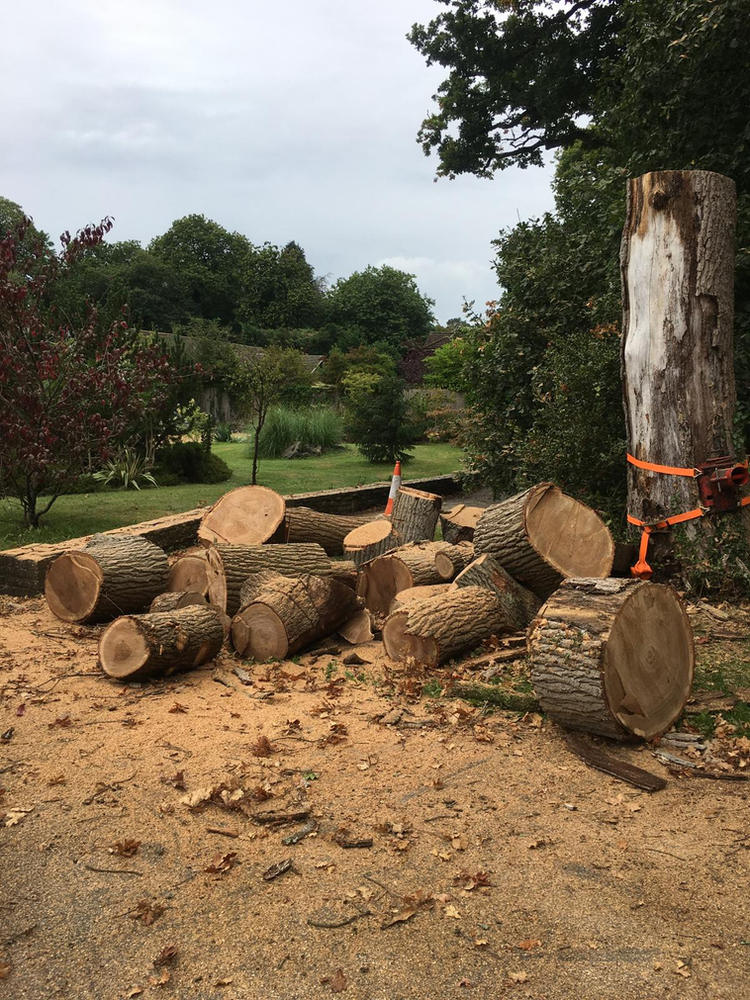
Stump grinding
Ground out to around 300mm below grade so you can turf, plant or pave straight over it.
Stump grinding
Forestry and woodland
Thinning, coppicing, ride clearance and estate management. We have subcontracted on utility lines for SSE and on local authority street tree contracts.
Forestry and clearance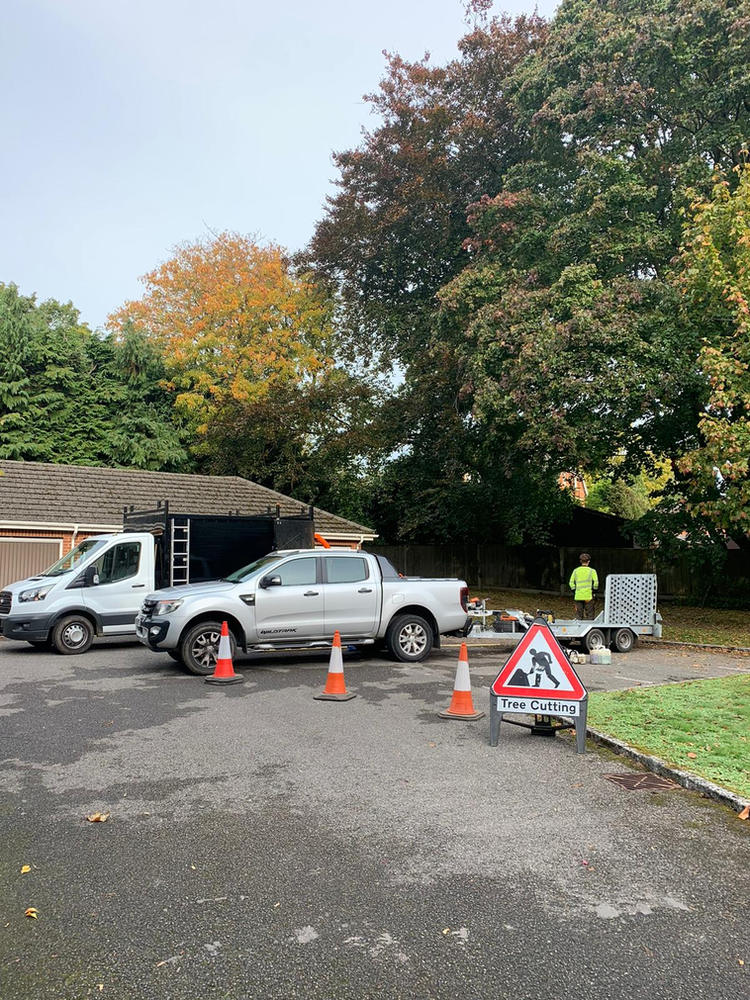
Commercial and council work
Method statements, RAMS, insurance certificates and traffic management as standard. Invoiced on account.
Talk to us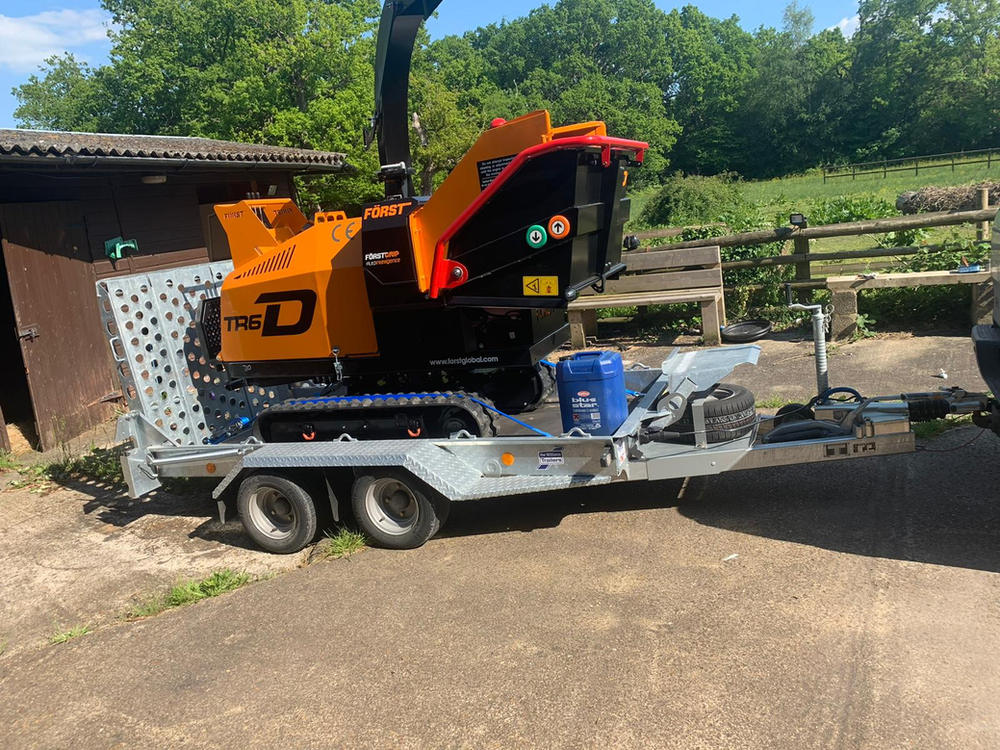
Woodchip and logs
Chip for paths and beds, and seasoned hardwood logs cut to length. Local delivery.
Ask what we haveHow a job actually runs.
You send a photo
WhatsApp or email a picture and your postcode. Nine times out of ten that is enough for a ballpark figure the same day.
We come and look
Free, no obligation, and we check for TPOs and conservation area status while we are there. You get a written, itemised, fixed price.
We book a date
Any council consent goes in first. Then a date that suits you, and a call the day before to confirm.
We clear up and go
Site raked and blown, chip and timber dealt with as agreed, invoice after the work rather than before.
Questions we get asked most.
Do I need permission to work on my tree?
Sometimes. If the tree carries a Tree Preservation Order, or it stands in a conservation area, you need consent from the council before anything is cut. In a conservation area that means six weeks' written notice; a TPO needs a formal application.
We check this for you before we quote, and we can prepare and submit the paperwork on your behalf. Cutting a protected tree without consent is a criminal offence, so it is worth five minutes of our time.
How much does tree work cost?
It depends on height, species, what is underneath it and how far we have to carry the timber. A modest hedge reduction might be a half day. A large beech overhanging a conservatory is a full day with rigging and possibly a road closure.
Quotes are free, itemised and fixed. We do not quote a low number and then find extras once the chipper is running.
Are you insured?
Yes. We carry public liability and employer's liability cover, and we will send the certificates over with your quote so you can check the figures before we start. Commercial clients are welcome to ask for our method statements and risk assessments too.
What happens to the timber and the brash?
Brash goes through the chipper and off site as standard. If you want the woodchip for beds or paths, say so and we will leave it in a heap where you want it.
Cordwood is yours if you want it, cut to a length that suits your log burner. If not, we take it away.
Will you make a mess of my garden?
No. We work off boards and mats where the ground is soft, we run a tracked chipper that spreads its weight rather than digging in, and we rake and blow the site before we leave.
The photographs on this site are how the jobs actually looked on the day we finished.
How far do you travel?
Domestic work sits mostly within about a thirty minute drive of Aldershot, which covers north-east Hampshire, west Surrey and parts of Berkshire. Contract and commercial work goes further, including London and the wider South East.
If you are unsure, ring and ask. We will tell you straight if you are better off with someone closer.
Not sure which of those you need?
Neither are most people who ring us. Describe the tree and what is worrying you about it, and we will tell you what the options are and roughly what each one costs.