
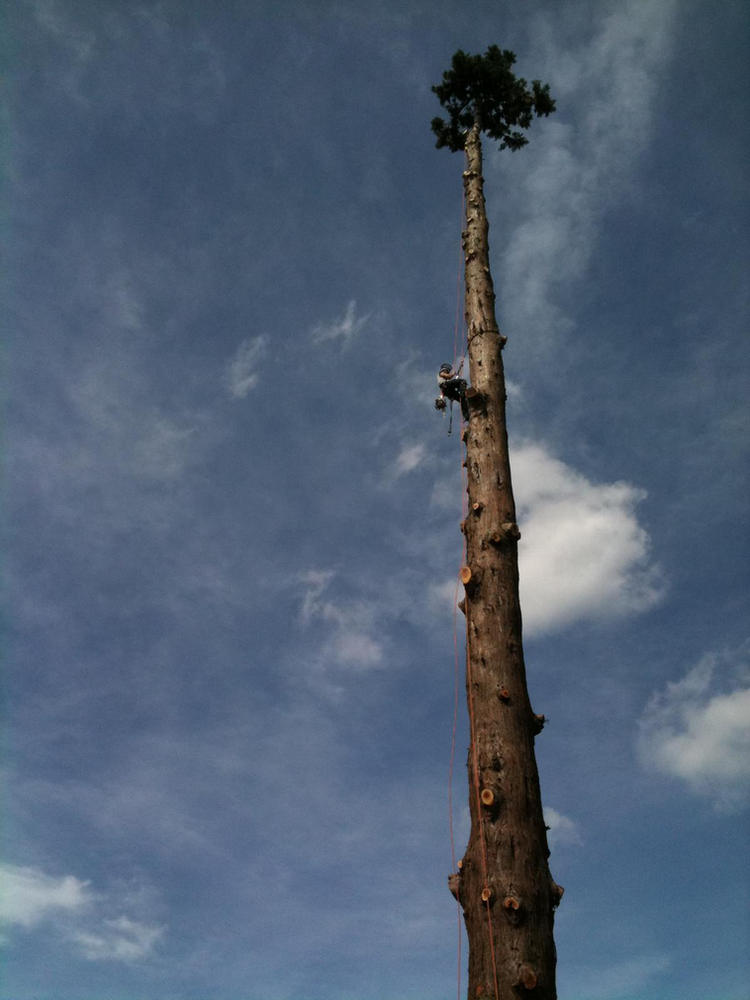
Tree felling and dismantling.
Taking a tree down safely when there is a conservatory on one side and a neighbour on the other.
Tree felling means cutting a tree down in one piece, which needs a clear space at least as long as the tree is tall. Most gardens do not have that, so the tree is dismantled instead: a climber removes it in sections from the top down, lowering each piece on ropes. Dismantling costs more than felling because it takes longer, and it is the only safe method over buildings, fences and gardens.
When a tree has to be dismantled rather than felled
Straight felling needs a drop zone at least the height of the tree, clear of buildings, fences, greenhouses, ponds, overhead cables and anything else that would not survive a tree landing on it. On a farm or a woodland edge that is usually available. In a Hampshire back garden it almost never is.
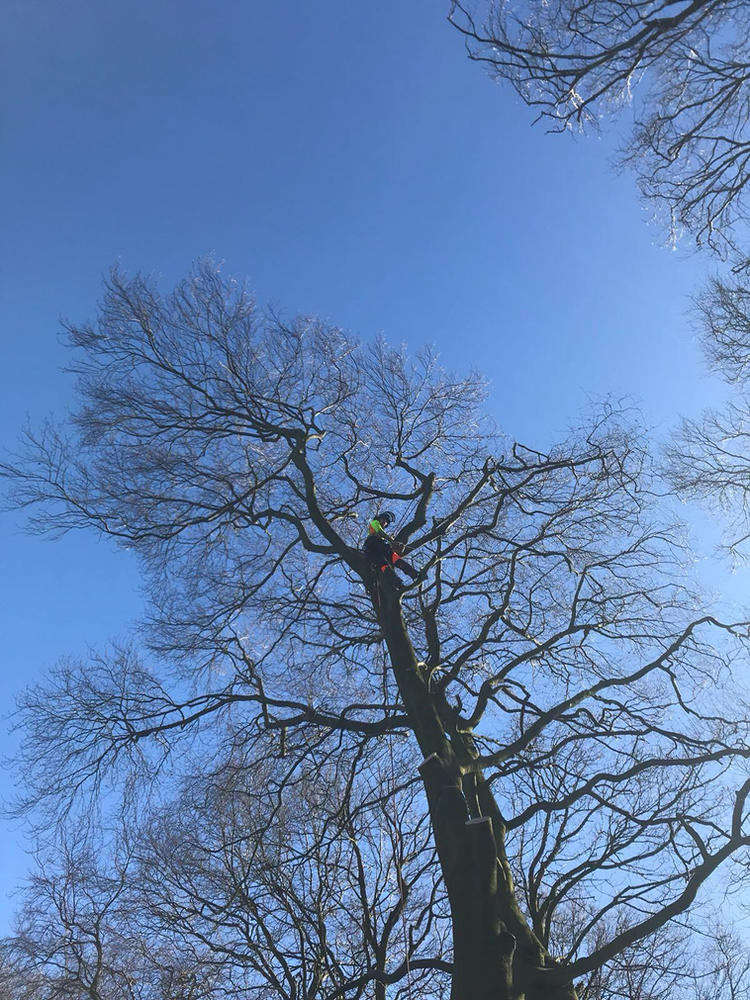
Sectional dismantling solves that. The climber works up the tree on ropes and harness, takes the limbs off in a planned order, and every piece is lowered under control on a rigging line rather than dropped. The trunk then comes down in short blocks. Nothing hits the ground at speed.
Do I need permission to fell a tree?
Sometimes, and it is worth checking before you commit to anything. A tree with a Tree Preservation Order needs a formal application to the council. A tree in a conservation area needs six weeks of written notice. Felling a protected tree without consent is a criminal offence and the fine is uncapped.
We check both before we quote, and we prepare and submit the paperwork for you at no extra cost. If your tree turns out to be protected, that adds about eight weeks to the timeline rather than stopping the job.
What we do with the timber
Brash goes through the chipper and off site as standard. If you want the woodchip for paths or borders, say so and we will leave it in a heap wherever you want it.
Cordwood is yours if you want it, cut to whatever length suits your log burner. If you do not want it, we take it away. Either way the site is raked and blown before we leave.
Leaving a monolith instead
Where a tree is dead or hollow but not threatening anything, we will often suggest reducing it to a standing monolith rather than removing it completely. You keep the habitat, standing deadwood being one of the richest wildlife resources in a garden, you remove the risk, and it costs less than a full removal because there is less to take down and less to cart away.
The short version
Common questions
How long does it take to remove a large tree?
A straightforward garden tree is usually a single day. A large beech or oak over a building, with rigging and a road closure, can be two days. We tell you which before we start rather than after.
Will you damage the lawn?
We work off ground protection boards where the soil is soft and run a tracked chipper, which spreads its weight rather than concentrating it under four wheels. Ruts are avoidable and we avoid them.
Can you remove a tree close to my house?
Yes. That is what sectional dismantling is for. Every piece comes down on a rigging line under control, which is why we can work over conservatories and boundary fences.
Not sure if this is what you need?
Describe the tree and what is worrying you about it. We will tell you what the options are and roughly what each one costs, including the option of doing nothing.